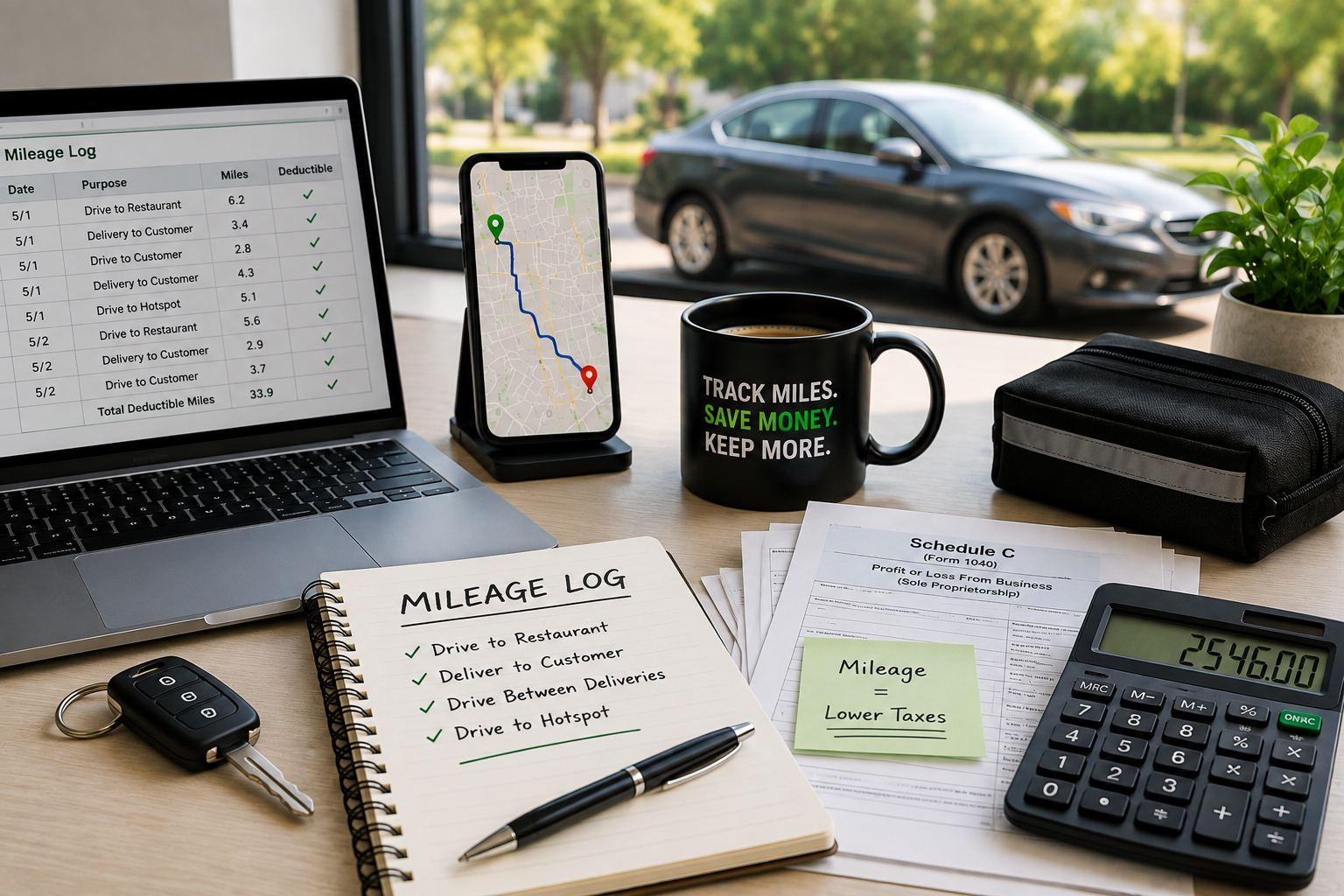
If you drive for DoorDash, Uber Eats, Spark, Instacart, Amazon Flex, Uber, Lyft, or another gig platform, your mileage deduction may be the single biggest way to reduce your tax bill.
Unfortunately, many gig workers either don't track their miles or aren't sure which miles count.
This guide explains everything you need to know about the mileage deduction in plain English.
Why Mileage Is So Important
For many gig workers, mileage is their largest business expense.
Every business mile you track can reduce your taxable income, which may lower the amount of tax you owe.
Accurate mileage records can save hundreds—or even thousands—of dollars over the course of a year.
Which Miles Count?
Generally, business miles include driving that is directly related to your work.
Examples include:
Driving to pick up an order
Driving to deliver an order
Driving between deliveries
Driving between work locations
Driving while actively working
Keeping a mileage log throughout the year makes claiming your deduction much easier.
Which Miles Don't Count?
Not every mile you drive is deductible.
Examples of personal miles may include:
Running personal errands
Driving to visit friends or family
Personal trips that aren't related to your business
Keeping business and personal driving separate will help you maintain accurate records.
Standard Mileage vs. Actual Expenses
There are generally two methods for deducting vehicle expenses:
Standard Mileage Method
This method allows you to deduct a set amount for each eligible business mile driven.
For many gig workers, this is the simpler option because it requires tracking business mileage instead of every vehicle expense.
Actual Expense Method
This method uses your actual business vehicle expenses, such as:
Gas
Oil changes
Insurance
Repairs
Tires
Registration
Depreciation (when applicable)
The best method depends on your individual situation.
Can You Deduct Gas Too?
Usually not if you're using the standard mileage method.
The standard mileage rate is designed to account for many vehicle operating costs, including fuel.
That's why it's generally an either-or decision rather than claiming both for the same miles.
Other Vehicle-Related Expenses
Depending on your situation, you may also be able to deduct certain business expenses such as:
Parking fees
Tolls
Delivery bags
Phone mount
Chargers
Business-use portion of your cell phone
Good recordkeeping makes claiming these deductions much easier.
How Should You Track Mileage?
The best time to track mileage is while you're working—not months later.
Many gig workers use mileage-tracking apps because they automatically record business trips.
You can also keep a written mileage log if you prefer.
The important thing is that your records are accurate and maintained throughout the year.
Free Mileage Tracking Apps
Keeping accurate mileage records is much easier when you use a mileage tracking app. These apps automatically record your drives so you don't have to remember every trip.
Here are a few popular options:
Everlance
Everlance automatically tracks your drives and lets you classify trips as business or personal with a simple swipe. It also helps organize your mileage records throughout the year.
Best for: Drivers who want an easy, automated solution.
Stride
Stride is a free mileage and expense tracking app designed for self-employed workers and gig drivers. It makes it easy to log business miles and estimate your tax savings.
Best for: Gig workers looking for a completely free option.
MileIQ
MileIQ automatically tracks your drives and allows you to categorize trips with a swipe. It also generates mileage reports that can be useful during tax season.
Best for: Drivers who want simple automatic tracking.
Which App Should You Choose?
The best mileage tracker is the one you'll actually use consistently.
Whether you choose Everlance, Stride, MileIQ, or another mileage tracking app, keeping accurate records throughout the year can save you both time and money when it's time to file your taxes.
Common Mileage Mistakes
Avoid these common mistakes:
❌ Waiting until tax season to estimate mileage
❌ Forgetting to track business trips
❌ Mixing personal and business miles
❌ Assuming your delivery app tracks deductible mileage for you
❌ Throwing away your records
Frequently Asked Questions
Is mileage really my biggest deduction?
For many delivery drivers, yes.
Mileage is often the largest deduction available and can significantly reduce taxable income.
Should I track every trip?
Yes.
The more accurate your records are, the easier tax preparation becomes.
Can I use a mileage tracking app?
Absolutely.
Many gig workers prefer apps because they automatically record trips and simplify recordkeeping.
What if I forgot to track my mileage?
It's always better to keep records as you go.
If you missed some trips, gather whatever reliable documentation you have and speak with a tax professional about your situation.
Related Resources
You may also find these guides helpful:
The Complete Gig Worker Tax Guide for 2026
The Complete DoorDash Tax Guide for 2026
How Much Should Gig Workers Save for Taxes?
How to File Taxes with Multiple 1099s
Need Help Filing Your Taxes?
At SharpLine Tax, I specialize in preparing tax returns for gig workers and independent contractors.
Whether you drive for DoorDash, Uber Eats, Spark, Amazon Flex, Instacart, Uber, Lyft, or multiple platforms, I can help you prepare an accurate return while making sure you're claiming every deduction you're entitled to.
Ready to get started? Contact SharpLine Tax today to schedule your tax preparation or explore the other free tax resources available on this website.
